Quality
Batch Documentation for Research Peptide Raw Material
Lots are released against a batch COA with HPLC purity and MS identity; document availability is confirmed per lot. The certificate reports chromatographic purity by HPLC, a molecular-weight result from mass spectrometry, and the manufacturing, test and retest dates. Public records are listed per compound so a buyer can read one before paying. This page explains what the certificate shows, what it does not, and what is not claimed.
The certificate
What a Pepti batch certificate contains
The certificate names the product, the CAS number, the lot number, the fill or quantity, the manufacturing date, the test date and a retest date. It reports chromatographic purity as the percentage of the chromatogram occupied by the main peak under the HPLC method used, and it reports a molecular-weight result from mass spectrometry, read against the expected value for the sequence. It closes with a conclusion line stating whether the lot meets its specification.
Two numbers do most of the work. The molecular-weight result is the identity check: a result close to the PubChem value for the CAS number means the main peak is the stated compound rather than a truncated or different sequence. The purity result is the proportion check: it says how much of the sample analysed is that main peak. Read together, they tell you what the material is and how much of it is the thing you ordered.
The public summaries show those fields and link a PDF presentation copy per lot. The library is maintained by Pepti and this site copies figures from it at build time; where the two differ, the library is the source and this site is corrected to match.
Limits
What the certificate does not tell you
A certificate is evidence about one lot under the tests that were run. Reading more into it than that is the most common documentation error we see.
-
Not fill mass
HPLC purity is a proportion of the sample analysed. It says nothing about how many milligrams are in a vial or how many grams are in a container. Weigh what you can weigh on receipt.
-
Not sterility, endotoxin or water content
Unless the certificate reports those tests separately, they were not part of the record. The public summaries report purity and identity. Buyers who need other tests arrange them on their own account against the lot number.
-
Not a specification for other lots
The public records for a compound show a range of results because they are different lots. The range tells you what this production has reported; the certificate for your lot tells you what you received.
-
Not a regulatory status
A certificate of analysis is a test record. It is not a licence, a registration or an approval in any jurisdiction, and nothing on this site should be read as one.
Verification
How to use the record before and after you pay
-
Open the record for the quoted lot
For allocated stock the quotation names the lot. Search the library by product name, open the record, and read the purity result, the molecular-weight result and the retest date before you confirm.
-
Compare the identity fields to the compound page
The CAS number and the expected molecular weight are on the compound page with the PubChem CID. The measured result on the certificate should sit close to the PubChem value. If it does not, ask before you pay.
-
Match the goods to the certificate on receipt
The lot number on the vial label or powder container must equal the lot number on the certificate and on the dispatch note. Photograph the label and the certificate together for your file.
-
Send a portion out if your process requires it
Independent testing is welcome and is the buyer's decision. A laboratory of your choosing can run its own chromatogram against the lot number; the record then has two sources instead of one.
-
Report a mismatch against the record
A result that disagrees with the certificate is handled with the lot number, your laboratory's report and photographs of the goods. The written order confirmation states how a mismatch on that order is resolved; this page does not promise an outcome in advance.
Records on the line
Batch records are written during production, not afterwards
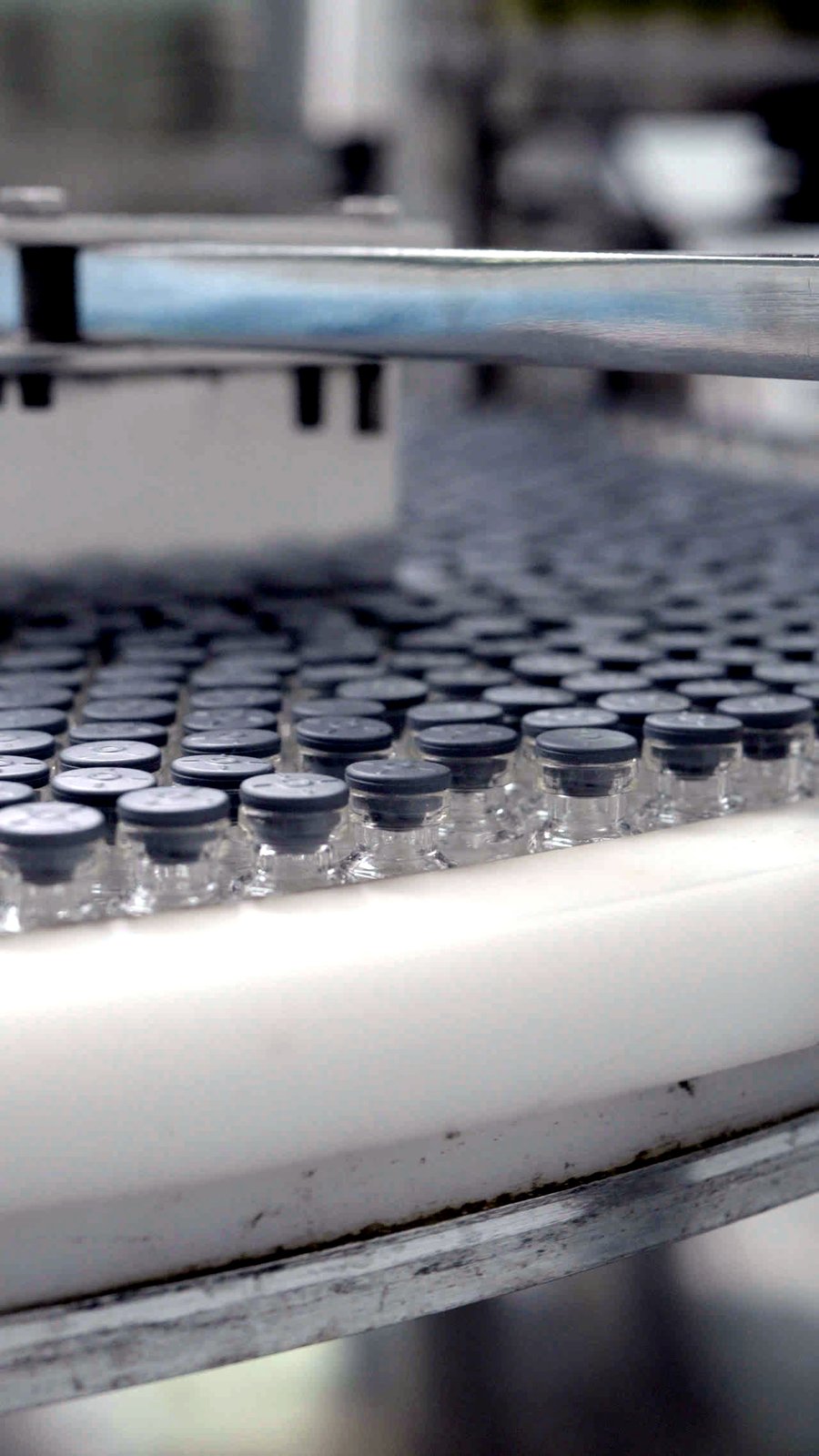
The photographs on this site are from the Pepti production floor in Guangzhou. Batch records are completed at the line as each step happens, which is what makes the lot number on a certificate traceable to a filling run rather than to a stock bin.
Dispatch photographs for this site are grouped by compound on the order photos page, so a buyer can see how an order of a given compound was packed and labelled before placing one.
- Lot numbers assigned at production, printed on labels and certificates
- Certificates issued per lot and published in the library
- Dispatch photographs grouped by compound
Lead times are quoted as typical windows
Each stage is a typical window after specification and payment confirmation; not a fixed commitment. The quotation states the window that applies to your order, and documentation is issued inside that window, not after it.
- 01Sample kittypically 3–7 days
- 02Production batchtypically 10–14 days
- 03OEM repeat batchtypically 14–18 days
What is not claimed
Pepti does not present itself as a cGMP drug-substance (API) manufacturer or CDMO and does not publish a GMP certificate or DMF.
No regulatory approval, registration or clearance is claimed in any jurisdiction. No purity figure is claimed for the production as a whole; every figure on this site is a result from a specific public lot. No third-party laboratory is named as having tested this production unless a buyer arranges that testing on their own account.
Material is for research use only and not for human or veterinary use. This site gives no application, handling-for-use or medical guidance.
Documentation questions
Is a COA supplied with an order?
Lots are released against a batch COA with HPLC purity and MS identity, and document availability is confirmed per lot on the quotation, whether or not that lot has been published in the public library yet.
Can I get the certificate before payment?
For allocated stock, yes: the quotation names the lot and its public record is in the batch table on the compound page. For material made to order, the certificate is issued when the lot is tested and supplied on dispatch; say on the enquiry if you need to see it before the goods leave.
What HPLC method is used?
Reversed-phase HPLC with the method stated on the certificate for that lot. The public summary reports the purity result; the PDF copy shows the reported conditions for that record.
Which certificates do you not publish?
No GMP certificate and no DMF. Pepti does not present itself as a cGMP drug-substance manufacturer or a CDMO and publishes no GMP certificate or DMF. What it publishes is a batch record per lot with HPLC purity and MS identity. A buyer who needs a different kind of documentation should say so before quoting rather than after.
Can my own laboratory test the material?
Yes, and it is encouraged. Order a sample kit or a small quantity of powder, send a portion to a laboratory of your choosing with the lot number, and compare their result to the certificate before scaling the order.
Ask for the record with the quote
Say which compound and format you need and that you want the lot record before payment. The reply links the record for allocated stock.
Prefer email? You can email the sales desk; put the compound and quantity in the subject line.